
See what service management practices actually do, not just what they're meant to do
A business simulation where teams adopt ITSM best practice and see the consequences directly, across availability, support costs and customer satisfaction.
Leading Companies





Knowing the theory isn't the same as seeing it work
ITSM training explains which practices to adopt. It doesn't show what happens when you apply them in a live operation: setting priorities, making service level decisions and seeing how incident, problem, knowledge and configuration management each affect cost and customer impact. This simulation puts teams in charge of a struggling IT operation and challenges them to turn it around, so service management and operations teams, which often work in the same value stream, build a shared understanding of the outcome they're both responsible for.
Practice-level realism
Participants set priorities and make service level decisions with the same granularity as a live operation.
Built on a working business
Decisions affect availability, support costs and customer satisfaction day to day, as they would in a live IT operation.
Every practice in play
Teams see how incident, problem, knowledge and configuration management each affect cost and customer impact.
How simulations solve this
Simulations let your people experience the change rather than hear about it. Participants run a realistic business, make decisions about technology and processes, and see the consequences of those decisions play out over multiple rounds. When someone experiences first-hand how a new way of working improves business outcomes, the rationale for change stops being something they were told and becomes something they know.
Enterprises typically license a simulation that has already been configured for the platform they're adopting. This means the experience is directly relevant to the specific change your organisation is going through, not a generic exercise.
What working with SXP looks like
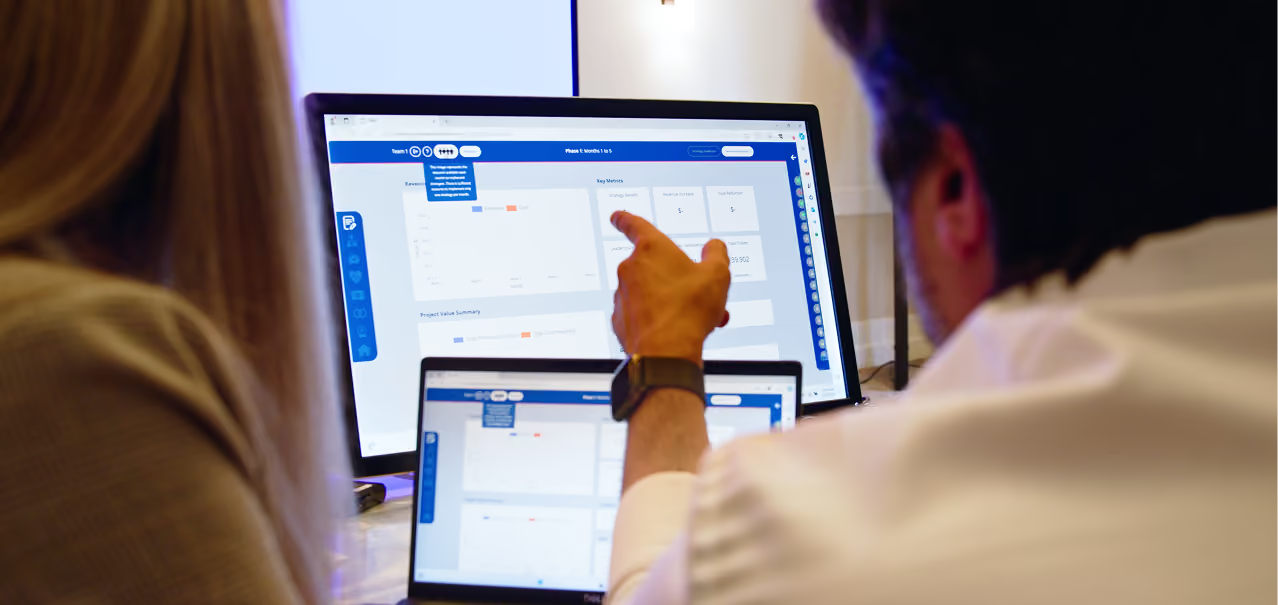
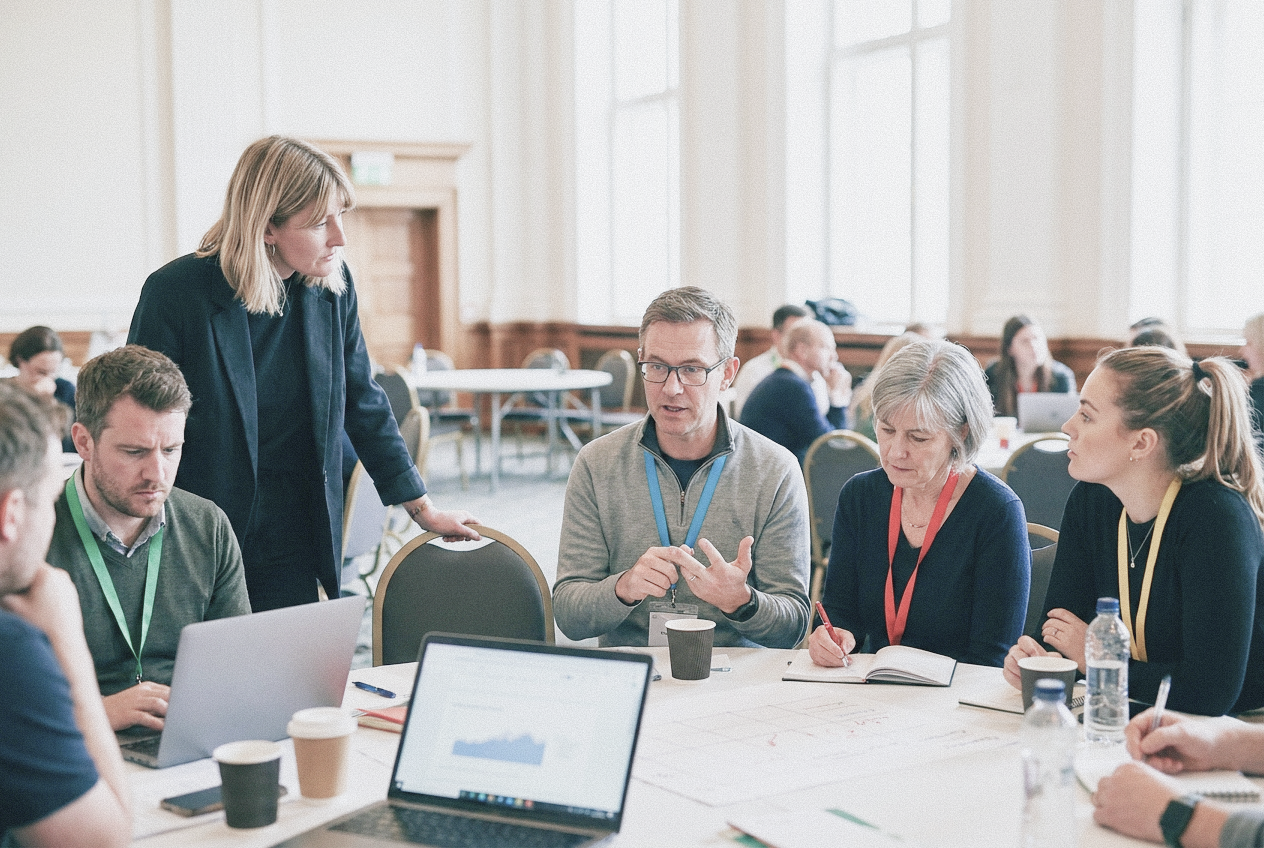
The starting point is understanding your transformation programme, the platform or practices being adopted, and who across the organisation needs to be reached. In most cases, a simulation already exists for the platform you're implementing, configured to reflect that platform's specific capabilities and value. SXP delivers initial sessions and trains your internal team to facilitate independently, so you can reach the wider organisation without relying on external delivery for every session. Sessions typically last 90 minutes to 4 hours, scale from 25 to 600+ participants, and work for virtual and in-person formats.
What to expect
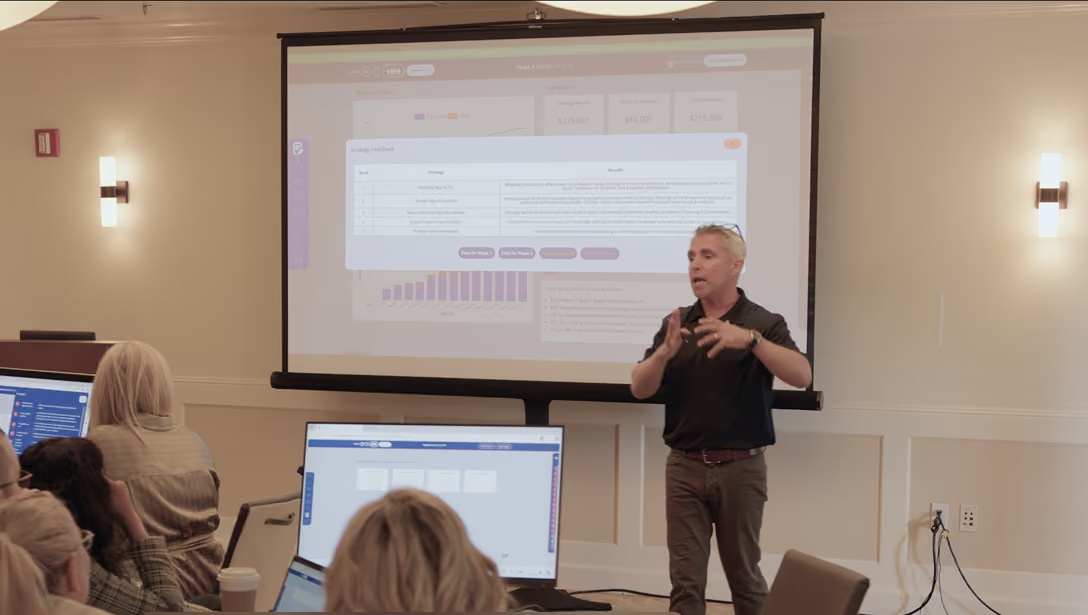
Every session is scoped before you start (length, how much time it compresses and how it's delivered), so there are no surprises for your team or your customer.

90 mins to 4 hours
Typical session length

Years into hours
A full transformation in a single session

Virtual or in-person
Run however suits your organisation or partners
Ready to talk?
Tell us what you're working on and we'll discuss whether a simulation would help. Email or a call, whichever suits you.