
See how service management decisions affect the business.
A business simulation where teams adopt ITSM best practices and see the consequences directly, across availability, support costs and customer satisfaction.
Leading Companies





Why a simulation
ITSM training explains which practices to adopt. Teams also need to understand what those practices are worth commercially, so they can make the case for them internally and lead others through the change. A simulation is where they see what incident prioritisation and automation do to support costs and customer satisfaction.
This simulation puts teams in charge of a struggling business operation and challenges them to turn it around. The decisions they make, and the consequences that follow, show how service management capabilities affect business performance. It works at the level of individual practices, so participants see how each one performs in a working business.
Practice-level detail
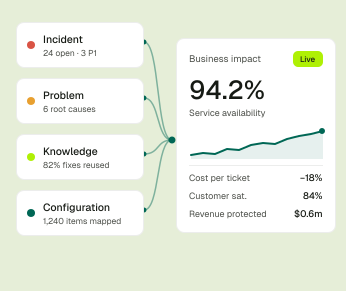
Participants work through incident, problem, knowledge and configuration management and see the effect of each one on its own.
Built on a working business
Decisions affect availability, support costs and customer satisfaction day to day, the way they would in a live IT operation.
Who this is for

Technology vendors


What it covers
The simulation spans the full ITSM operating model.
- Incident management
- Problem management
- Knowledge management
- Configuration management
- Change enablement
- Automation
- Shift left
- Service desk
How a session runs
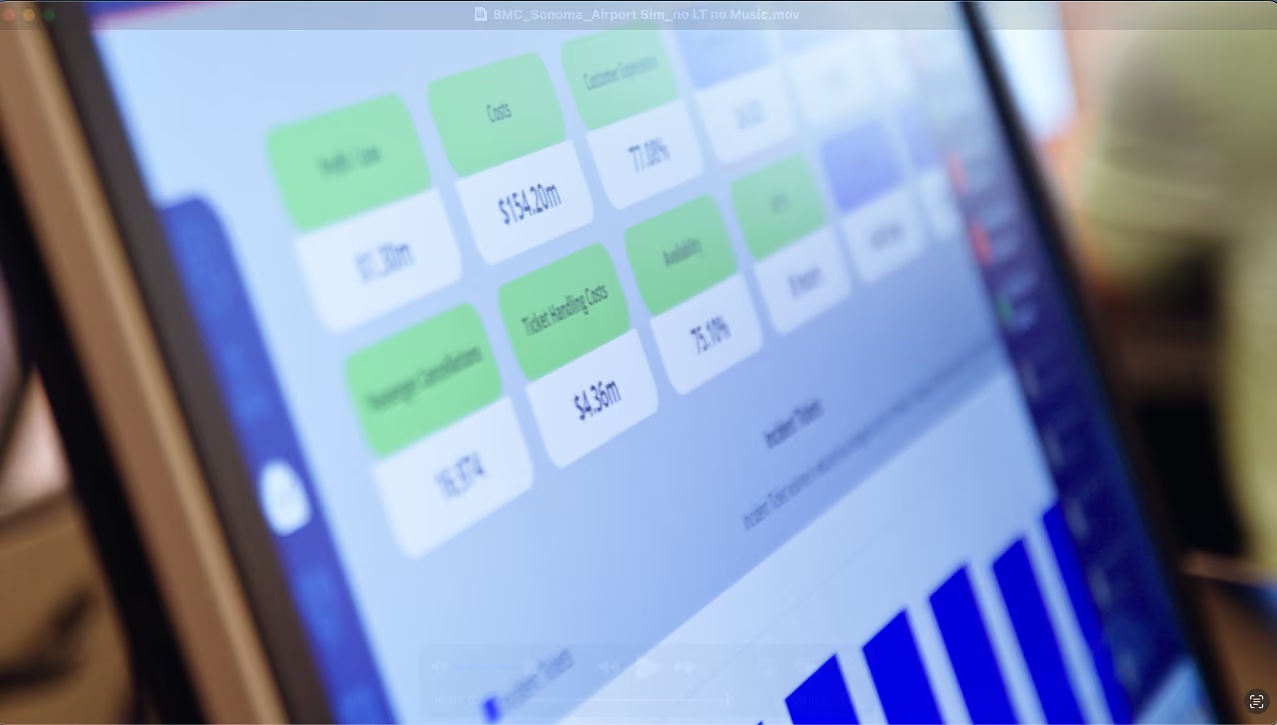
Teams analyse a live business dashboard, select which ITSM capabilities to implement, work within a budget and respond to the data in front of them. The simulation tracks four performance areas throughout: system availability, support costs, change value and customer satisfaction.
The session follows an ITSM maturity progression. Teams start with the most immediate business pain before working through availability improvements, ticket handling, request fulfilment, automation, and eventually change and release management. Each stage builds on the last, so participants see how ITSM capability compounds rather than seeing practices in isolation.
Sessions run with teams of three to five, virtually or in person.
Ready to talk?
Tell us what you're working on and we'll discuss whether a simulation would help. Email or a call, whichever suits you.